AI-powered extraction, validation, and reporting of Scope 1-3 emissions data—turning messy corporate documents into audit-ready inventories.
ESG emissions data comes from a wide range of unstructured corporate sources—utility bills, fuel receipts, travel logs, supplier invoices. Processing this manually is onerous for consulting teams and a bottleneck for commercializing emissions accounting software.
An AI-powered workflow that ingests documents in any format, extracts emissions data with confidence scoring, enables human validation, and exports audit-ready reports—with full traceability throughout.
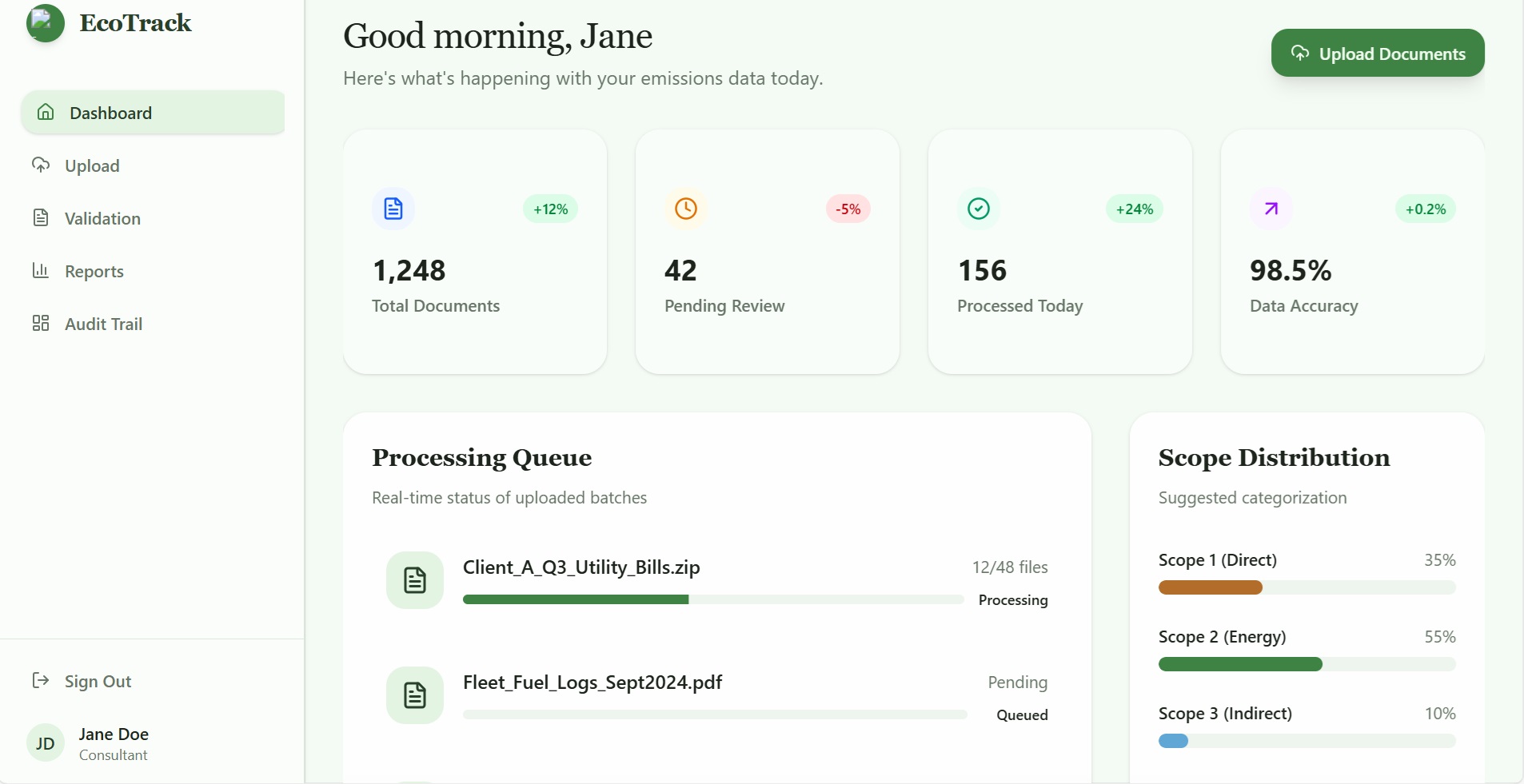
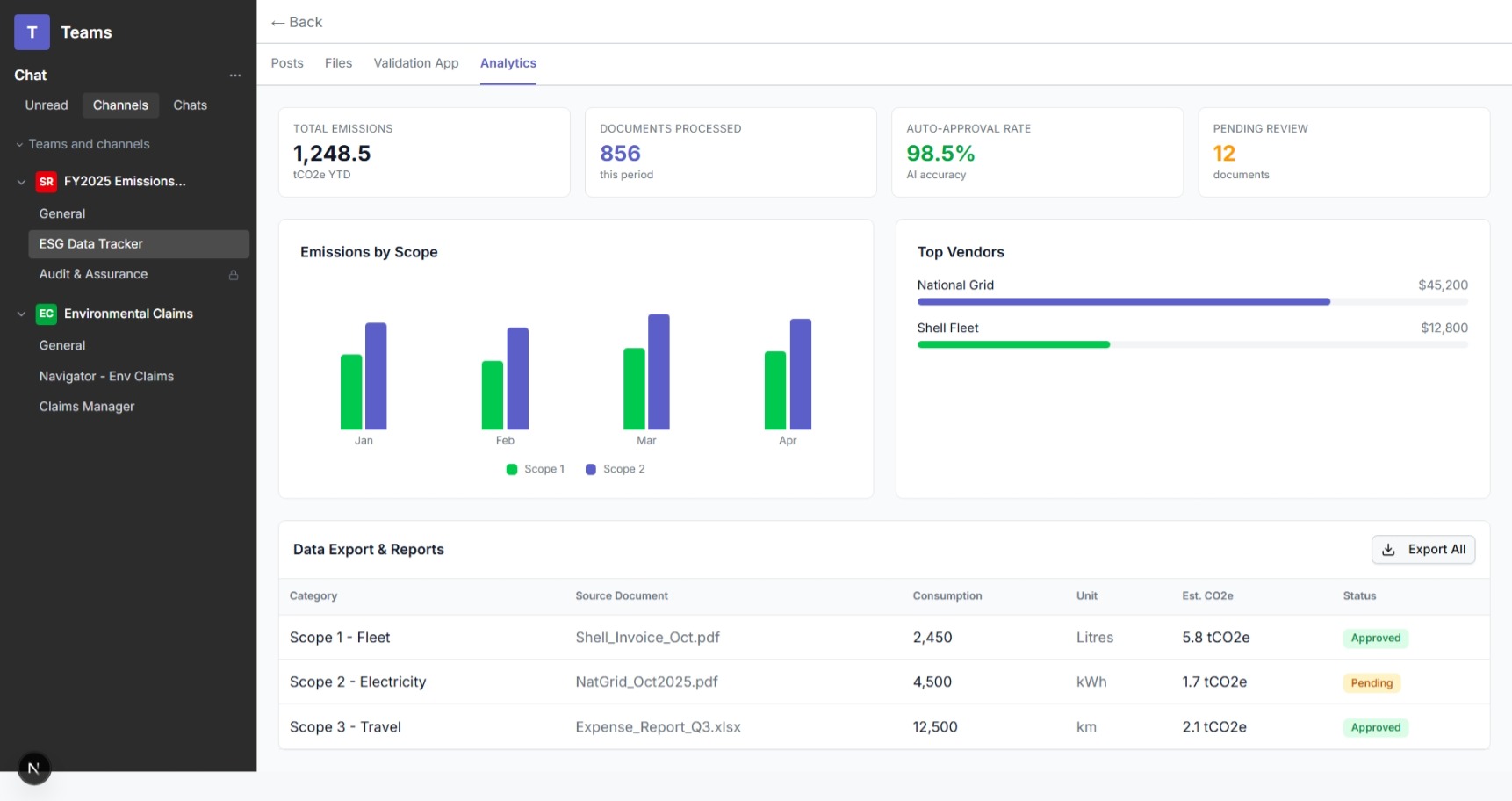
Users see an overall view of ESG documents processed—by emissions scope category, site, or business unit. Real-time metrics on processing queue, accuracy rates, and pending reviews.
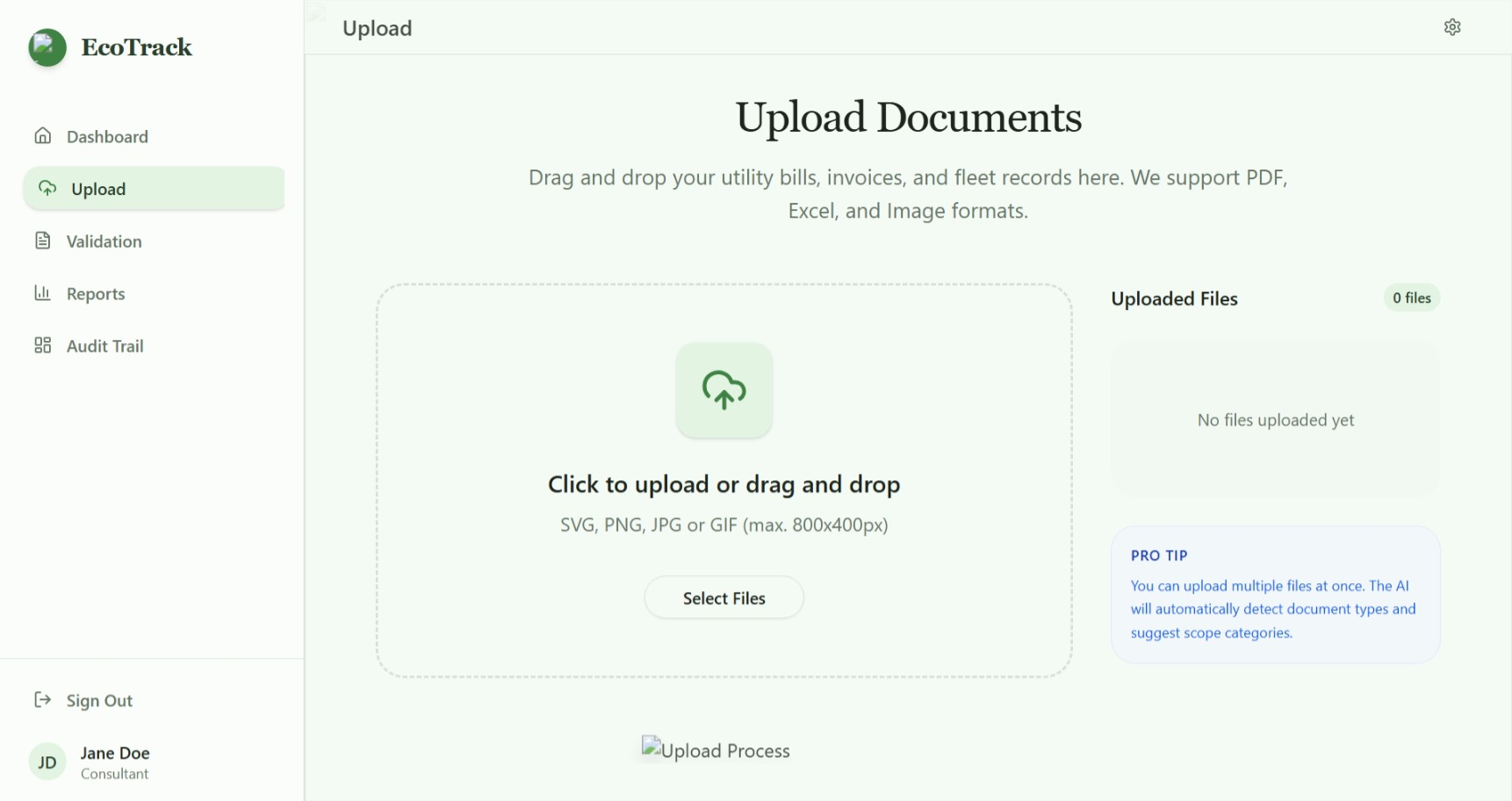
Input documents can be uploaded individually or from predefined folders in batch mode. AI automatically detects document types and suggests scope categories.
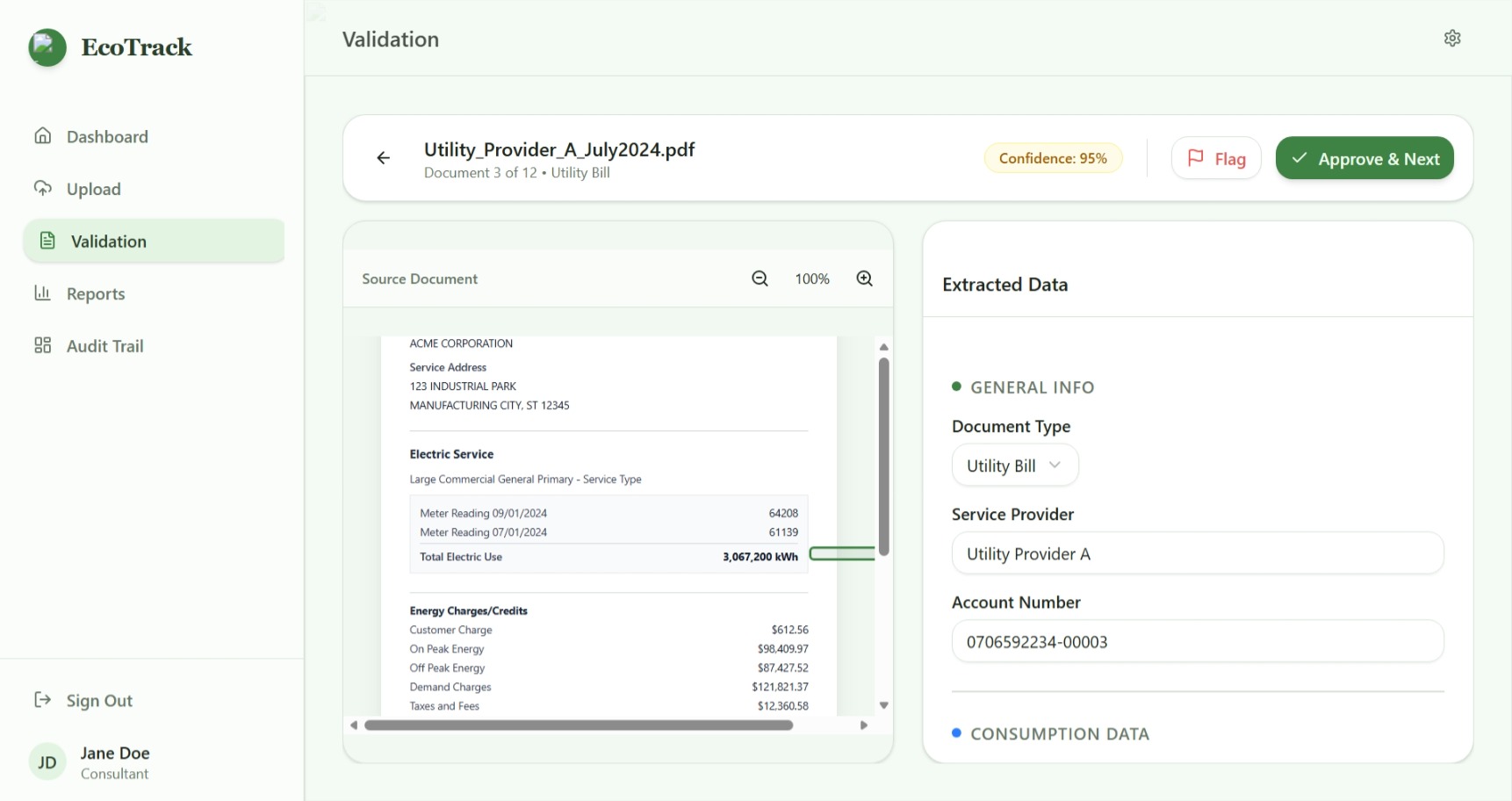
Document validation view shows AI-generated summary of extracted data with accuracy confidence levels. Users can approve, edit, or flag AI-generated outputs for review.
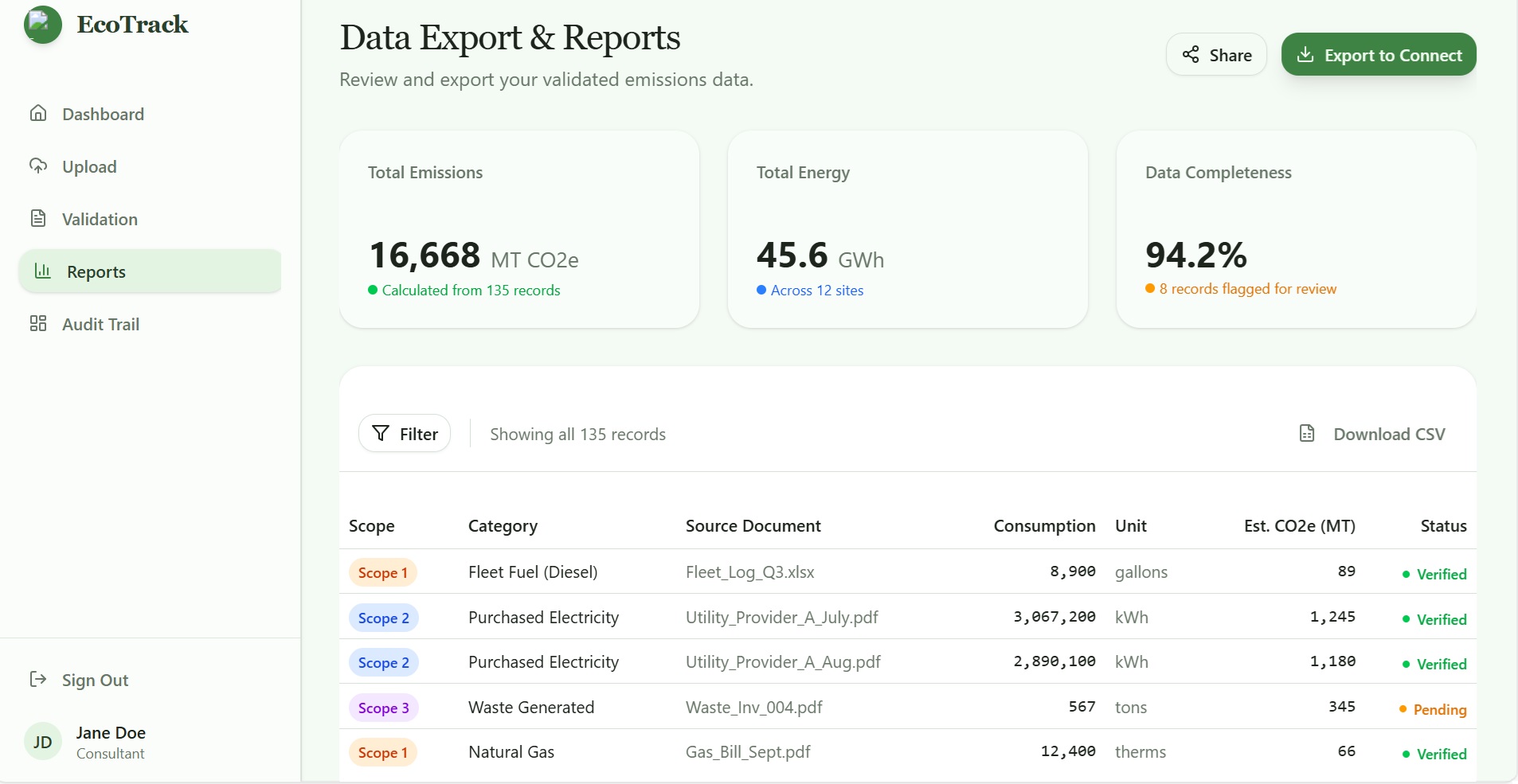
Extracted and verified emissions data can be exported into required output reporting formats. Summary metrics, scope breakdowns, and source document linkage included.
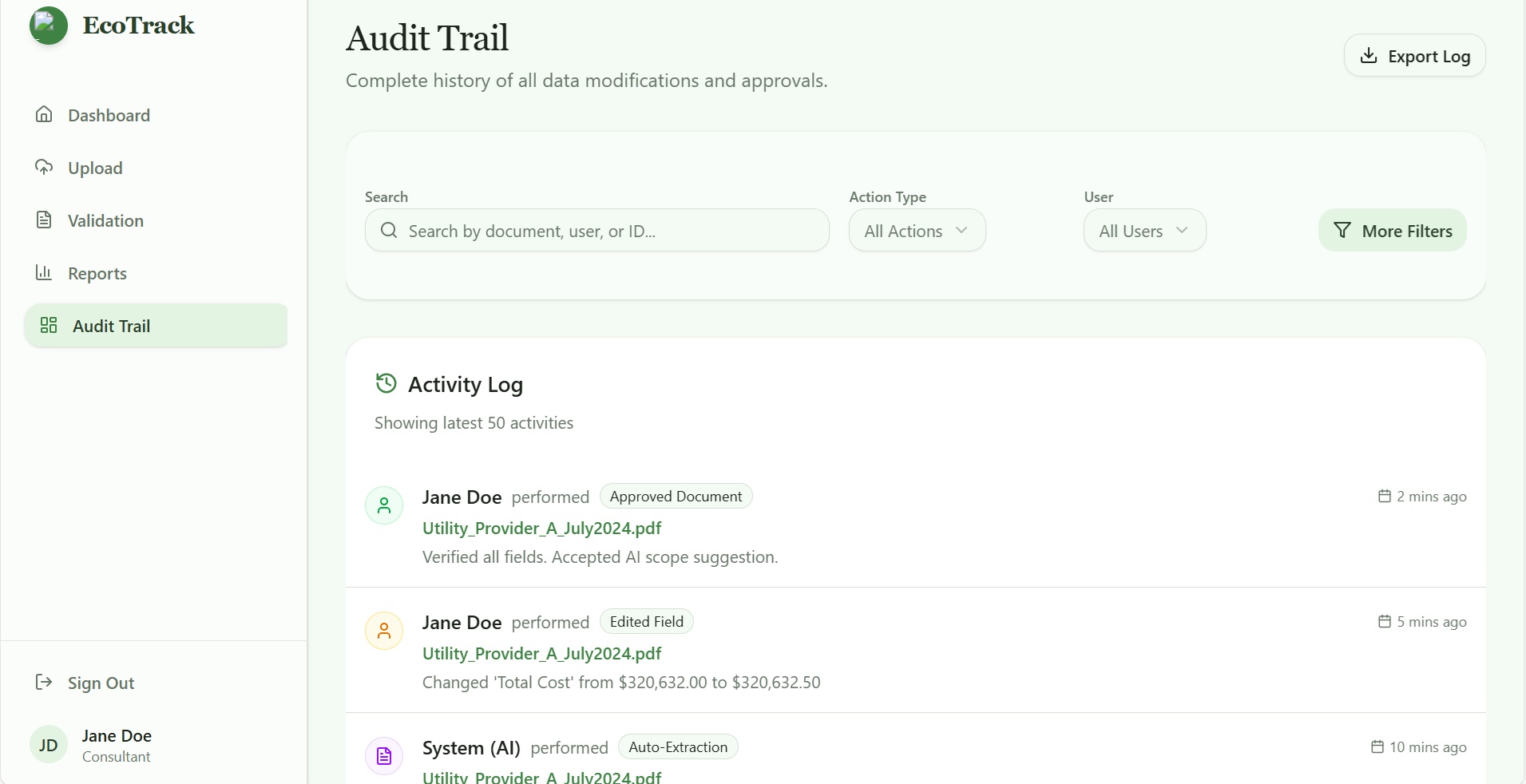
Full audit trail of all system activities and records maintained for compliance purposes. Every action logged—uploads, AI extractions, manual edits, approvals.
Same functionality available as MS Teams plugin via collaborative channels and tabs. Analytics dashboard, scope breakdowns, and export capabilities embedded where teams work.
Upload utility bills, invoices, and fleet records in any format. AI automatically detects document types, extracts key data points, and suggests scope categorization.
AI-generated extractions include confidence scores. Users approve, edit, or flag outputs before final processing—maintaining quality and accountability.
Every data point traceable to source documents. Full activity log for compliance. Export to standard reporting formats with complete provenance chain.
End-to-end development using AI-assisted workflows—from specification through deployment.
This use case lends itself well to emerging agentic functionality—parsing and interpreting different kinds of input ESG data, then normalizing outputs for final calculations.
Similar workflows exist for other ESG regulatory compliance topics where messy inputs are strewn across complex organizations and need to be managed and maintained accordingly.
For compliance data, full automation isn't acceptable. The validation workflow with confidence scoring and explicit approval maintains the accountability regulators require.
Speeding up and making emissions data processing more efficient removes a key blocker to selling and commercializing broader emissions accounting software suites.